
Agnosticism Very Short Introduction – Robin Le Poidevin
While in the UK, I was looking for the VSI* book on consciousness, as the assistant was looking at the rack for the book, Madeleine pointed out this book on agnosticism. This is the fourth book I have read about agnosticism presumably by agnostics, they were: In God We Doubt, John Humphrys; How to be an Agnostic, Mark Vernon; Agnostic: A Spirited Manifesto, Lesley Hazleton and the current book Agnosticism VSI, Robin Le Poidevin. The last book is the most formal, which I liked. The first two, by British broadcasters, left me non-plussed especially Vernon. Hazleton from Washington, she gave us a spiritual take on agnosticism. Anyhow, Le Poidevin takes us through what agnosticism might be, its history, what are the reasons for being agnostic and how to be an agnostic. Far more so than did Vernon. He does touch on the fact we need not be agnostic just about the divine, but his arguments are mainly focussed on God. At the end of his book he gives a nine-point manifesto for agnostics.
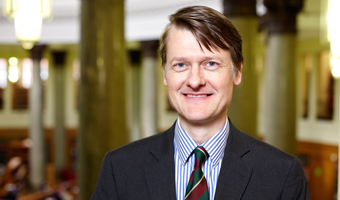
Professor of Metaphysics at the University of Leeds
Before going through his nine points, Le Poidevin goes over what God might mean or perhaps explain: origin of the universe (if it had one), is there an explanation for it existence, is there a purpose of life and if so what, where does our moral conscience come from, and how can the conscience tell us what is right? But for most of the book he limits his God:
- The ultimate and intentional cause of the universe
- The ultimate source of love
- The ultimate source of moral knowledge
for his arguments.
[1] As far as the onus of proof is concerned, the theist and atheist are in exactly the same position; neither has a greater duty to justify their position than the other. There should be no automatic presumption of atheism, but rather an initial presumption of agnosticism.
One of my criticisms of Robin Le Poidevin writing is that he is not clear always which definition (strong or weak) of atheist he is using. Here he seems to be using the strong atheist definition. Assuming he is, then I tend to agree that both the theist and atheist have similar burdens should they be proselytizing to anyone. I don’t recall him referring to Occam’s razor in the text, it might be a tool in an agnostic’s toolbox, but not necessarily the only one.
[2] Theism is not ‘bad science’; it is the very general hypothesis there exists, in terms of an intelligent being, a true unifying explanation of the world, ourselves, our consciousness and our capacity for good. The initial probability of the proposition that there exists such an explanation (as opposed to a detailed attempt at one) is not smaller than the initial probability that there is no such explanation.
While I understand Le Poidevin’s point here, there are so many theisms out there and I don’t get a sense they error check, which is an essential aspect of ‘good’ science. If there is movement in the God hypothesis it is driven by our increased scientific understanding of the way this universe ticks rather than through religions careful study of their hypotheses.
The second part of Le Poidevin’s second manifesto point reads strange to me. I can only interpret it as initially the general god hypothesis is as likely true as not … and perhaps even more likely to be true. Really? I am not sure how we can even get these initial probabilities nevermind weigh them.
[3] The agnostic principle: always seek reasons for beliefs, and do not make knowledge claims that are not adequately supported by the evidence. Clifford’s statement of this principle, that it is wrong, always, everywhere, and for anyone, to believe anything upon insufficient evidence, is too strong. Clifford does not allow for degrees of belief: we should proportion the extent to which we are inclined to believe something to the weight of the evidence.
The first sentence I agree with … And I think I agree with the intent of the critique of Clifford’s position. We can’t help but have beliefs regardless of how much we might try. As pointed out in my previous post on agnosticism I would bet against there having been life on Mars in the past. This belief of mine is based on minimal evidence and yet I have it. Having said that it would take next to nothing in terms of evidence to sway me the other way.
Now if I am forced to make a similar call on God, surely I can rule out Norse, Roman, Greek, Hindu and Abrahamic Gods without too much agnostic angst? Now if we start waving our arms around and suggesting these are Campbellian metaphors for some other form of the divine then I am going to need to dig into the detail as to what we mean exactly before pontificating much further.
[4] The evidence which is often pointed to as supporting, or undermining, theism is ambiguous: it can be shown to be consistent both with theism and atheism without resorting to ad hoc implausible manoeuvres.
Here I agree too. Pointing to a tree is as much evidence for a God as it is for no God. But a funny thing happens when we start pointing at all the mechanisms: the biology, the evolution, the chemistry, the physics, the bit that was godly seems to move into the gaps … quantum phenomena or perhaps (not so) intelligent design.
[5] Since the evidence is ambiguous, commitment either to theism or atheism is, at least in part, an emotional response to the world, not a purely rational one. But this does not make either theism or atheism an irrational response. Theists regard the religious attitude as natural, in-built, and one which is valuable and to be encouraged and developed. Atheists, while often recognizing the response as natural, see it apt to delude us, and as something to be exorcised. The difference is more temperamental than either side acknowledges.
Speaking from personal anecdote … possibly. At the age of seventeen at the height of my vaguely Lutherany-deism; a year later went to university and essentially the concept of God more or less did not come for the next seven years. Perhaps with exception of getting married in a church. By the time I finished my studies I was a confirmed agnostic. Having said that I was effectively a strong atheist with respect to a whole variety of mainstream Gods. The sheer inconceivability of Gods I have never heard of and angels coming to a lady and foretelling of an immaculate conception is enough evidence for me. The subsequent forty years did little to change that.
I suppose I am seemingly comparing my incredulity to Christian beliefs, to the belief how on Earth we could have existence without a Christian God. Could I describe my initial belief as emotional or temperamental? Possibly. But I also recognize that the belief was a mixture of societal pressures and reason. My response to having my beliefs questioned might have been emotional, but they certainly more a reflection of my environment. Similarly, my current views are a reflection of my university years and they seem to have stuck.
[6] Agnosticism as an attitude should not be viewed as final, but should be provisional, to be accompanied by an open-minded attitude, and a willingness to look at the new evidence and arguments.
I think I agree here with the intent. But again, observing my personal anecdote I did not switch from deist to agnostic intentionally … it just happened over time. And I think this touches on temporary and permanent agnostic positions (TAP and PAP) discussed in the Agnosticism post. If as the author, in his book, points out we can never be sure how can one stop being agnostic? Yet Le Poidevin seems to be suggesting a strong atheist might be convinced by evidence there is no God but still recognizes some small degree of uncertainty. Or is the author suggesting it is OK to give up on agnosticism if the evidence warrants it?
[7] There are different shades of agnosticism, reflecting different views on how probable or improbable theism is. The admission that one doesn’t know whether or not God exists is entirely compatible with either a theist or an atheist outlook. There can be belief without knowledge.
Again, I agree with this. I cannot be absolutely certain the universe exists, but I can happily wend my way through what I see as the universe’s trials and tribulations. But I have to admit it seems a little strange that someone might say I believe God does (or does not) exist, but I can’t provide sufficient evidence for my belief. Yes, we can have different degrees of certainty and uncertainty.
This reminds me of a Daniel Kahneman quote, “Knowing is the absence of alternatives of other beliefs.”
[8] Even the kind of agnosticism that takes theism and atheism to be equiprobable is compatible with a practical and emotional commitment to a religious way of life. James [William] thought that such a commitment necessitated genuine belief, but the agnostic participation in religion is more akin to participation in a game of make-believe.
I am not sure I buy into this; but I will give this to Le Poidevin for the moment.
[9] Agnosticism is part of the wider phenomenon of uncertainty, and uncertainty is positive in so far as it promotes creativity, theoretical progress, and social tolerance. Agnosticism thus promotes religious pluralism: peaceful co-existence between different faiths, and between religious and humanist groups. What id does not promote or imply is a relativistic view of truth: ‘Islam is true-for-me but false-for-you and so on.
I am not sure I would give all these positive traits solely to those agnostically inclined. It is almost a semantic argument, by definition someone wanting to learn more or explore has agnostic traits. So yes, I tolerate Christians and the like. When a Jehovah’s Witness (usually a pair) I invite them in and discuss things for as long as the time we have available. I am far from sure that agnosticism ‘promotes’ religious pluralism. Why on Earth would an agnostic promote the belief the whole Earth was flooded or that it was created six thousand or so years ago. And then in the same breath, argue against post modernist truth. As an agnostic I would not promote any religion which by definition claims to have truth on its side, and in some cases can be quite harmful.
And in the end
Overall, I enjoyed the book and thoroughly recommended as a short introduction to the topic of agnosticism. While not exactly disagreeing with the manifesto, I suspect, I would have worded it differently.
* VSI – Very Short Introduction

 rom's corner