
Let’s clear this up straight away, well actually I am or I might be an atheist, by at least some definitions. For me it is not a big deal. I am certainly an atheist in the sense that I actively disbelieve in many, if not most, Gods. I lack disbelief in pantheism and gods that have not have been dreamed of yet. This is along the lines of a Richard Dawkins’ argument:
Everybody is an atheist in saying that there is a god – from Ra to Shiva – in which he does not believe. All that the serious and objective atheist does is to take the next step and to say that there is just one more god to disbelieve in.
Here Dawkins seems to see not believing and disbelieving as the same thing. Hitchens took a similar tack pointing to a strong definition in his Portable Atheist.
Paul draper put the cat amongst the pigeons, at least in some circles, when in the 2017 Stanford Encyclopedia of Philosophy article on atheism and agnosticism he suggested:
The “a-” in “atheism” must be understood as negation instead of absence, as “not” instead of “without”. Therefore, in philosophy at least, atheism should be construed as the proposition that God does not exist (or, more broadly, the proposition that here are no gods).
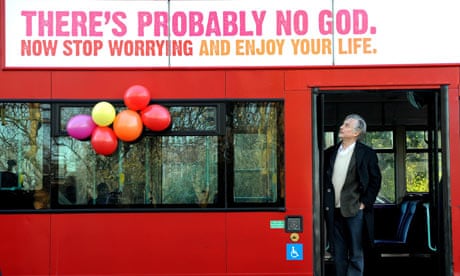
Draper does admit that popular use seems to be lacking in belief. And a quick non-statistically binding survey of the shows that both are in play:
- a lack of belief or a strong disbelief in the existence of a god or any gods
- the doctrine or belief that there is no God.
- disbelief or lack of belief in the existence of God or gods.
- lack of belief in the existence of God or gods
- the belief that there is no god (Chambers 2007)
I don’t want to go into a semantic breakdown here in what the term atheist means from an etymology point of view. It is irrelevant. Having said that, a Oxford dictionary from 1990 and Chambers and a Merriam Webster dictionaries from the seventies, just gave the strong definitions. The 1883 Chambers Encyclopedia gave a very dark view of the perception of atheism. and definitely a strong definition. But in George Smith’s Atheism: The Case Against God (1979) he suggested:
The man who is unacquainted with theism is an atheist because he does not believe in a god.
I should read the book. I can’t find a reference on the web; but somewhere, I remember reading this was a conscious decision on Smith’s part to nudge the definition to the weaker sense. Of course this is not a new view of atheism either.
Personally, I understand there are two broad definitions of atheism floating around and it does not hurt to be clear which of the two flavours of atheism we are referring to, strong or weak, when discussing the subject. The problem seems to arise when religious types insist on the strong definition and this draws the ire of some vocal atheists. On the other hand the blanket statement of atheism is not about belief, but a lack of belief includes many of us who disbelieve in a variety of gods (even believers) and some who actively believe no gods exist.
So in a sense the title of this piece is misleading. It is just that the concept of god, or the lack of, is completely irrelevant to my daily life (other than interminable discussion). So, why label myself in terms of an irrelevant aspect of my life? If anyone would like to suggest that it is because I am cowardly … see you behind the bicycle sheds </joke>. More seriously what evidence do you have for such an assertion? On the other hand if there are people who avoid the atheist label, simply because they don’t want to drive a wedge between them and their nearest and dearest … I get it. Is that cowardly or picking your battles? Of course the term atheist has been used as a pejorative, even Christians and Jews in antiquity have labelled as atheists for believing in non-existent gods.
How I see and handle knowledge is far more of interest to me. Hence the agnostic label.

 rom's corner