
I asked ChatGPT to give eight headings to structure my thoughts around how I might approach this topic. It volunteered eight with a whole bunch of subheadings. Obviously, these are interrelated and might be reorganized differently and supplemented. Also, it might make for a long post, and my post will touch on much that I am largely ignorant of. We’ll see how it goes.
I write this as I draw near the final paragraphs. If a wandering soul passes by, perhaps they might suggest where I may have strayed, missed the mark, or where I might be on a different planet.
1. Economic Policy
Well, generally I’m careful with my money, and I expect the government to be careful with what I ‘give’ to them. Broadly, I could be described as a social capitalist, but I am also suspicious of an everlasting growth model that capitalism seems to be based on. (see Zero Sum).
Taxation, government spending, fiscal responsibility
On the whole, I am in favour of taxation. Ideally, taxation should be prorated, not necessarily linear, according to one’s ability to afford the taxes. While I don’t necessarily agree with “soaking the rich”, they definitely should pay more with the marginal tax rate. Generally, I don’t spend or borrow more than I can afford to pay back.
Monetary policy, inflation, employment
Here I am out of my depth. Keep inflation and unemployment low. How? Good fiscal policies, stable government, and good luck with the chaotic universe. At least with respect to world politics and events.
Trade and industrial policy
Trade, on the whole, is beneficial in that it can allow efficient use of our resources. But again, we have to be careful here, as some aspects of our lives are zero-sum or even worse, a negative sum. I am surprised that there are some trade barriers across provinces in Canada. On the other hand, some jurisdictions could use trade as a means of coercion. We can see the Trump administration doing this, and China has also done this in the past, probably as have most countries. Ideally, we should not exploit our trading partners, nor should we be exploited.
While a government should definitely not be beholden to large corporations, and this is self-evident, it should not be attached to union organizations either. Take the recent postal disruption in Canada, where the union(s) are holding a part of Canada to ransom. Essentially, they seem largely unaware that the postal age is on the brink of extinction. On the other side, management, no doubt foreseeing the future, has done little to adapt to the new reality and position Canada Post to compete with private couriers.
2. Social Policy
Now, if my good looks, intelligence, my ability to attract a trophy wife, and consequently get a well-paid job are a matter of luck, then what reasons are there for me not to contribute to other people’s welfare?
Education, healthcare, housing
Primary and secondary education, of course, are given and should be subsidized if not paid for by the ever-suffering taxpayer. There are interesting questions around whether the wealthy or those who scrape by and put their children through private schooling should also get subsidized. For this question, I would suggest some kind of means test. Whether tertiary education should be subsidized is also an interesting question, as Bernie Sanders has suggested. My initial reaction was that it would be too expensive. Then I remembered that the ever-suffering taxpayer, together with my parents, had paid for my tertiary education as well. Having said that, the subsidy should be based on ‘merit’ (SAT scores, exams, etc.). And also the parents’ income.
Most civilized Western countries have a form of universal healthcare. For me, it beggars belief that the USA resorts to a patchwork system where some 25 million people do not have health insurance. And of the +90 % of the people that have insurance, at least half are underinsured in some sense.
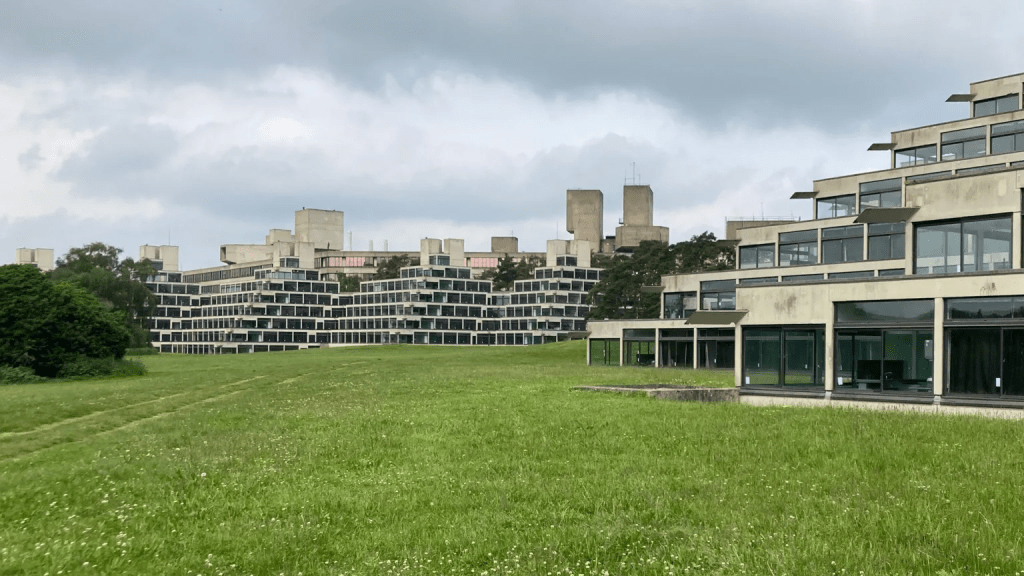
In terms of housing, I see the government’s role as creating conditions for building housing that will meet the needs of population growth (birth, and immigration if desired), obsolescence of old housing and perhaps even a decreasing population. I grew up in a house that was built in the latter half of the 1800s; it is still a desirable building to live in. Housing built in the 1960s is less so. So I would encourage quality housing.
Cultural and identity issues (language, family, religion)
As a foreigner in a foreign land (apologies to Heinlein), I have some sympathy for keeping immigrant and indigenous languages alive. A second language is, in my mind, a benefit. In Canada, we have the Quebecois; I understand the want to keep the French language and identity alive. Similarly, we have 12 major indigenous language families in Canada, which might be subdivided into over 70 separate languages. It may not be practicable to save all seventy, but I understand the desire. English speakers don’t understand how powerful their language is, and how it can subsume other languages.
Ideally, religion does not get involved in politics. Policy needs to be based on evidence and rationality. Of course, people, including politicians, come packaged with sorts of beliefs. These must be set aside. Having said that, politicians do hide the fact that they believe in divine births from the electorate, as did Tony Blair. Having said that, I find it just as scary when the electorate votes for someone because they believe in some kind of divine birth.
Immigration
This one is tough for me. I have been an immigrant twice. On the first occasion, I was very young, and my parents chose for me. On the second, I chose another country to find work. Now that I have returned to Canada and have lived here longer than anywhere else combined, I still feel like an immigrant. What is the purpose of the immigration policy?
- To keep the current inhabitants happy? While this would be a pragmatic consideration, I don’t think it would be ultimately a useful direction to go.
- To meet the country’s need for growth or a deficit in skills? For the former, I think the growth model will eventually come to an end, but is now the optimal time to make this change? I doubt it. To meet a skill shortage? This implies that education and the capitalist process have been inadequate. Also, sucking educated people out of third-world countries, I suspect, will not be ultimately sustainable.
- As a form of charity for war-ravaged and economic refugees, Syria and Ukraine come to mind. I don’t know, I think that would depend on the state of the country I was in.
3. Foreign Policy
Yes, governments should have a foreign policy, and as such, I would not advocate for isolationist and protectionist agendas.
Diplomacy, treaties, international organizations
Governments supporting international organizations like the United Nations make sense. Ideally, countries should support these organizations according to their abilities. Also, we can do more together, eg it makes sense to vaccinate against polio communally on an international scale
Defence alliances, war and peace decisions
With defence alliances, we might get dragged into wars that we are not interested in. On the other hand, they also keep us out of conflicts. I could have mentioned this earlier, but countries that have close trade ties tend not to go to war with one another.
Aid and development
I tend to support charities and the like, not because of some principled altruism, but because I don’t like seeing people in hurt on the street and perhaps having to steal from shops or even worse from me. Similarly, at the international level, it makes sense to help countries in need so that people don’t need to migrate illegally or even worse start wars.
4. Defence and Security Policy
Growing up, one of my goals in life was to make it to the age of 47. Now, for a child, this is a pretty sad goal. But growing up in the Cold War era, the history of two recent World Wars, parents who left what was to become the Soviet Union, and a microcosm (community) that had escaped Communism, this seemed not a totally unreasonable goal. Why 47? I would get to see 2001, the next millennium.
National defence, intelligence, counterterrorism
Does a country need a national defence? Well, I suppose it depends on the international climate and how reliable your neighbours are. This ties into the reliability of the defence alliances we have entered into. So yes, I would have a well-funded national army, air force, etc. Intelligence? I suppose the price of freedom is eternal vigilance, often misattributed to Jefferson. Counterterrorism I would subsume under intelligence and policing.
Policing, anti-corruption, and public safety
I am definitely not of the defund the police ilk. The police should be well-funded, well-trained, educated, and not of a political persuasion. I am writing this bit at the time of Renee Good and Alex Pretti. I really do not understand the American people.
Cybersecurity
In this day and age, digital security is increasingly an absolute must:
Infrastructure, with ever increasing interconnectivity of things from our toasters to power grids, we need to protect our collective and individual security. Of course, there is a cost here. I would include the military and the police in infrastructure.
Banking, our financial systems need protecting too. Whether it is the cumulative rounding to the nearest penny, or some hacking into one’s account or that of a financial institution.
Social Media, there is an interesting balance between when it comes to free speech. Do we allow bots and then people to spread disinformation? This undermines politics and public trust. On the other hand, I am in favour of allowing people to put on display what I see as their stupidity.
Data Governance, is also an interesting one. Collected data might be divided into two camps: that is collected by the government, and that is collected by the likes of Meta, Amazon, Alphabet, Microsoft, etc. Governments need to collect data to plan for and assign resources; this definitely should be kept secure. Similarly, for the large conglomerates. Quite often, we are the product that is sold or at least our data. A freedom of information policy for some of our larger institutions might be interesting.
5. Environmental and Energy Policy
While I have never been directly involved with environmental regulators, I got the sense, at the business end of environmental protection, that the interactions between the regulators and implementors were, on the whole, positive. At more senior levels, the interactions tend to be more public and consequently more adversarial and politicized.
Climate change, conservation, sustainability
Anthropogenic climate change is real! The debate is only about how much. To me, the science is settled. It would seem to me that as the world’s politics unfold, we are not going to meet our 1.5 °C target. We will have to gear up for the consequences of climate change and coastal flooding. Will the bread baskets of the world move, and how severe will the effects on the weather be of putting all that extra energy into the atmosphere? Also, what will be the effect of the acidification of the oceans on marine life? This probably worries me more than global warming.

So yes, conservation is a worthy route to take. Reforestation, especially in the tropics and temperate zones, is not unreasonable. Though this makes for an interesting discussion with respect to food security. Just as an aside, projects like Colossal Bioscience’s de-extinction of the dire wolf are not conservation in any sense. I suspect having ‘meaningful’ conservation will require a drastic reduction in the world’s population.
Resource management, pollution control
I think resource management is important and should have one eye on the future. An exemplar of this was how Norway handled its North Sea fossil fuel bonanza. Today, it has about a 1,5 to 2 trillion-dollar sovereign fund, the largest in the world. It has developed expertise in the requisite technologies. In contrast, the UK squandered its bonanza in exchange for short-term gain. This is OK, but little of that ‘gain’ was invested in the future. Chile is also a good example of using its resources wisely. Chile used more of a partnership model with international miners. Though disparities still exist, and perhaps Chile could have done more to develop downstream industries for its copper. And of course, China is an excellent example of thinking long-term for resource management. It could be considered almost predatory.
Philosophically, existence is pollution. The yeast in my bucket of grape juice is polluting the juice with ethanol and releasing carbon dioxide. A little more pragmatically, yes, industry, agriculture, and governments, and we ideally want to minimize pollution. But we need to realize there is an optimum: where removing pollutants to ever lower limits can and will produce pollution of its own. Up-front planning would be ideal, but there are always unintended consequences.
Energy production, transition, and security
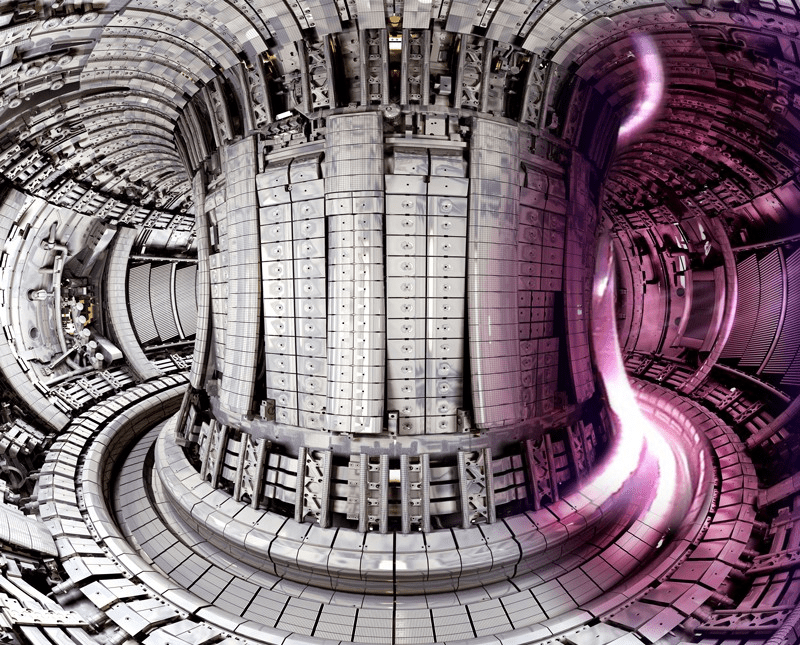
Yes, a country or a jurisdiction should be largely self-sufficient in terms of energy. Of course, being integrated with neighbours may hold some benefits in terms of energy distribution and efficiency. Ideally, the energy should be “renewable”, and weaning ourselves off hydrocarbons makes sense long term. Though I fear that ship may have sailed some twenty years ago. The transition from fossil fuels? Ideally, it would be based on the best evidence we have at hand. I am not against nuclear power, and I hope the new reactors, particularly the thorium-based reactors, may lead the way. And then we have the almost Quixotic fusion reactors, always fifty years into the future.
6. Legal and Constitutional Policy
Definitely outside of my comfort zone.
Civil rights, liberties, equality before the law
I need to be careful here so that I don’t speak out of both sides of my mouth. The useful fiction/convention of rights helps us, as a society, navigate our lives. Today, as I write this section, Peter Boghassian has changed his mind regarding society subsidizing “affirmative care”, a euphemism for a sex change. His argument is, why should we subsidize people’s sex changes when it can be considered self-mutilation, it is unlikely to lead to a happier outcome for the individual and will lead to an ongoing medical and societal cost. Are sex changes a right? Do I have the right or liberty to blaspheme? Is complaining about what I see as excesses of a religion, hate speech? Is the phrase I hate stupidity hate speech?
Judicial independence, constitutional amendments
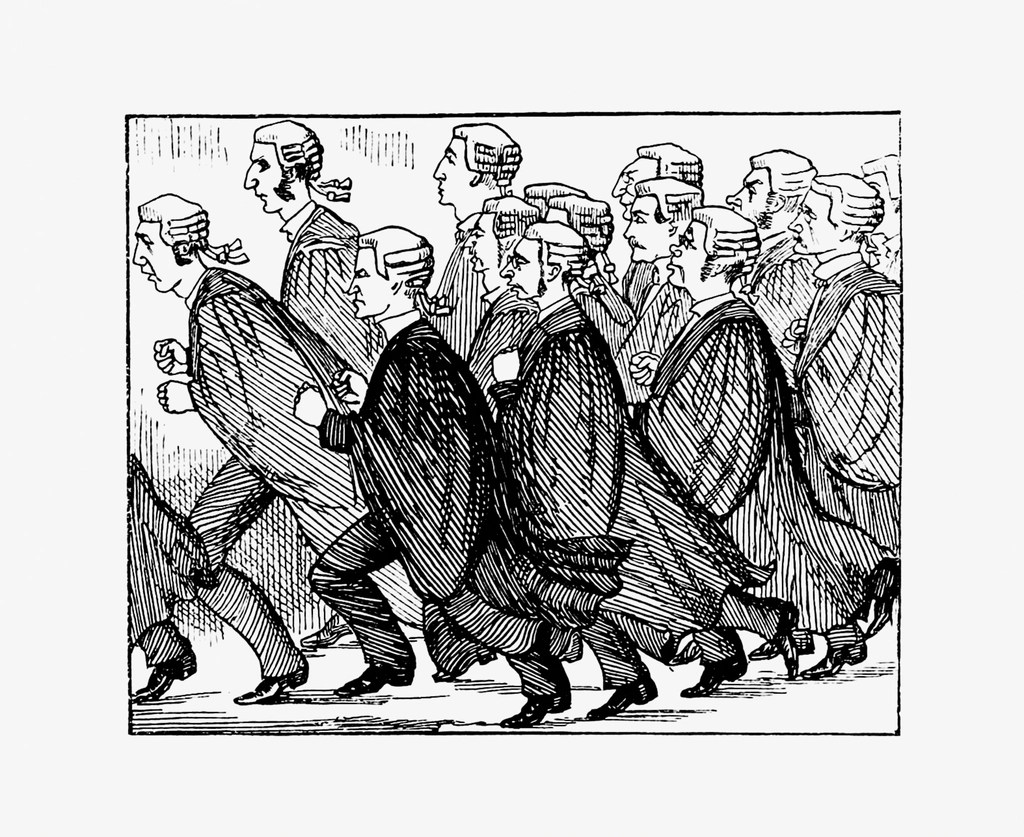
Judicial independence is an interesting one. I find the US system bizarre. At the top, it is a mess; at the bottom, there is a partisan crowd electing judges largely based on politics. To be fair, the UK system is where an unelected body, but ostensibly impartial, decides who will hold high judicial office based on merit. Is the UK system democratic? Does it have to be? I would argue no. So long as it is transparently based on merit.
Criminal justice and corrections
Here, we have to be clear on the purpose of justice and corrections. For me, the purpose of corrections has several objectives:
1) Deterrence is the weakest. Crime is committed out of necessity, spur of the moment, cultural acclimation, or mental illness. Perhaps a mixture of all of them. While necessary, it generally is not strongly correlated with recevidism.
2) Restraint, I am all for protecting society from individuals or groups who are breaking laws and not pulling in the same direction as I or society would like.
3) Restitution and restoration may work for minor crimes. I doubt there is any sensible restoration, say for the death of a loved one.
4) Rehabilitation, for me, is the most sensible. Of course, not all will be rehabilitable, and here we must protect society and restrain the miscreant. Restoration may well be part of the rehabilitation package.
And then we have:
5) Retribution. Here, I would try to educate the public not to seek retribution. But this would be an interesting philosophical challenge.
7. Infrastructure and Technology Policy
In a modern world, an infrastructure and a technology base are essential. Consequently, a policy might well be of benefit.
Transportation networks, communication systems
Transportation networks? Yes, we need them. Who provides them? Like much else, a government’s job is to make sure that networks are provided. Is it the government or some private or corporate institution?
Urban planning and housing development
Best laid plans of mice and men. What have men got to do with it? Apologies to Burns and Adams, not necessarily in that order. Yes, we need to plan for population expansion, contraction, movement (away from flood-prone cities), and, perhaps, as best we can, for the unexpected. Populations are in constant transition. Does a country and community (perhaps the world) have an optimum community? If so, perhaps planning for it would make sense.
Science, Innovation, Artificial Intelligence
Science, yes, not everyone can be or needs to be a scientist. Ideally, I would like everyone to be scientifically literate, but this belongs more in the earlier education section. The development of science ideally would be shared by industry, government and academia. Each will have different emphases. Universities will train future scientists and engineers and will study the basic building blocks of nature and perhaps identify how the new knowledge might be applied. Industry will mostly identify and pilot new technologies, and the government will take a look at standards for materials, environment and safety in general. There will, of course, be an overlap among the three institutions.
Innovation, industry will likely be the primary lead for innovation … bringing ideas and knowledge into practice. Universities will usually not have the wherewithal to truly innovate, and government, perhaps, except with the military and counter-intelligence, usually does not have a mandate for innovation.
Artificial Intelligence, this is going to be interesting. I don’t think the full fallout has yet been recognized. There are going to be unintended consequences, probably negative, but some positive. Will politicians become an endangered species?
8. Administrative and Governance Policy
Generally, I am not a fan of policy, at least not overly detailed policy. It is prescriptive; it cannot meet every instance, and one will be doomed to failure and trip up over the details. On the other hand, it is a necessary evil, so to speak.
Structure and reform of government institutions
I find it strange in Canada that there are different laws in various provinces. For example, there are subtle differences in the highway code, liquor laws, resource management, taxes, and labour laws, to name a few. Why the duplication of laws and the bodies that go into making laws? I understand the US State and Federal distinction, as some of the States approach the size of Canada. This seems to lead to a feeling of disenfranchisement outside of Ontario and Quebec. Having said this, I can’t see being able to abolish the Provincial (or State) governments.
Transparency, accountability
Transparency is a double-edged sword. Sometimes we really don’t want to see the sausage-making process. So there is a time and a place for transparency.
Electoral systems and political participation
One of the major failures of Trudeau’s first term was not obtaining a proportional representation electoral system. Apparently, the various party representatives could not agree on the system. Only if Canada had a charismatic leader at that time. As much as I don’t mind a first-past-the-post system (it does minimize the extremes of the political division), I suspect, ultimately, they do need to be represented proportionately.
I like the idea of being encouraged to vote with a small fine if you don’t vote. This is used in Australia, 20 $ AUD for the first time. Going up to 180 $ for other missed opportunities to vote. Having a voter ID makes sense, but it should not be onerous to obtain one. Being allowed to opt out after, say, 65 or 70 years of age might make sense. I would also like an option on the ballot to spoil my vote.
And in the end
The love you take
Is equal to the love you make
Apologies to the Beatles
This essay turned out to be a larger chunk than I could easily digest. I ran for local council a while back, and here I realized the conflicting pressures I might face:
- Do I represent the majority of people who voted on a particular issue or voted for me?
- Do I represent the people who disagree with the majority or did not vote for me?
- Do I represent my fellow council members (party, politicians, government)?
- Do I represent council employees (staff, civil service)?
- Or do I represent what makes sense to me, bearing in mind that might change as new information or understanding comes to light?
The larger the group I find that I might be serving or speaking for, the larger the size of the varied voices I would want to draw on for advice. That is not to say I would agree with the advice given. But in some sense, I would want to hear the voices I would end up dismissing. And I suppose this is true about the political opinions I express and the opinions I dismiss.
And ChatGPT 5 places me:
- One Nation Conservative (modernized) or Labour (Blair-era centrist faction) in the UK
- Centre-left Democrat, technocratic in the USA
- Pragmatic Liberal, slightly left of centre in Canada
- And for fun, in Latvia, I would be aligned with Jaunā Vienotība (New Unity)

 rom's corner