
I thought I would have a crack at Hinduism. I asked ChatGPT to summarize the core aspects of Hinduism, and it gave the ten sections (in italics), which I reordered. Overall, it is not a tradition or set of traditions I can buy into.
There are about 1.2 billion Hindus worldwide, with many traditions and schools of thought, and no doubt a myriad of individual beliefs. So, consequently, when I use the terms Hindu and Hinduism, this can be a generalization. I could preface each term with: some, a majority or minority, I haven’t, but I hope you get my drift.
Hinduism is a complex, diverse tradition with no single founder or universally accepted set of doctrines, but there are some core beliefs and philosophical concepts that are widely shared across most schools and sects. Here’s a summary of the key ideas:
1. Brahman (Ultimate Reality)
What exists fundamentally?
- Brahman is the absolute, unchanging reality, beyond all forms and attributes.
- It is both immanent and transcendent, and is the source of all being.
- Different sects may worship this reality as personal deities like Vishnu, Shiva, or Devi.
Brahman (Ultimate Reality); this made me inwardly smile. What would the antirealist make of this? As for the unchanging reality, this sort of fits with a block universe. I will ignore the worship of Brahman as a personal deity for now.
I think the concept of Brahman is interesting. Brahman reflects a cosmotheistic view of a single consciousness, as opposed to pantheism, where everything is conscious. It has parallels with Western idealism. It also has parallels with neutral monism. This concept seems to rest on the idea that there must be an unchanging aspect to reality. We atomists are always looking for the next fundamental particle. Protons and neutrons are not it. Electrons: who knows? Neutrinos seem to change at will. Of course, we have time, space and spacetime. These don’t seem to be constant or fundamental, though a block universe has a shot at it.
The argument is that we need an unchanging fundamental, and I understand the argument. This is a valid line of thought, but it could just as easily end up in some form of physicalism as in Brahman (idealism). Also, I could argue (semantically) that change is fundamental. I find it interesting (in an almost sad way) that Brahman is not a core tenet for all Hindus.
2. Ātman (Soul / Self)
What is a person in relation to that reality?
- The ātman is the inner self or soul, considered eternal and divine.
- It is not separate from Brahman—the source of all existence.
- Realizing this unity is essential for liberation.
For me, there is a lot of evidence against an eternal ātman. I have no evidence for an ātman before my birth. My soul seems like it can be switched off and on at will, say with di-isopropylphenol. Now, making this ātman somehow connected with Brahman, a concept that I don’t buy into, weakens both concepts for me. Having said that, my consciousness is all part of the one Brahman consciousness. I accept a monistic interpretation in terms of cause and effect. I certainly don’t consider whatever I have that might be taken as soul as eternal or divine. But, I agree, there is a unity with family, community, nation, nature, Earth, the universe in general. It’s all connected by what we call physics.
Now, a proponent of ātman might argue that the anesthetic simply switches off the memory of my soul. It would seem the memory of my eternal ātman is off pretty much all the time: before gestation, birth, before the evolution of biology, formation of stars and star stuff, and even before the current cosmos. For me, proponents of ātman are going to bring some evidence to the table that is convincing. They argue that ātman is an aspect of pure awareness. But the evidence seems to show consciousness is not ontologically primary; it is a product of the interaction of “star stuff”. Having said that, I don’t think I have, or Brahman has a convincing key. I am prepared to have an agnostic aspect to this debate.
3. Samsara (Rebirth / Cycle of Existence)
What problem are we in?
- Life is seen as a cycle of birth, death, and rebirth.
- This cycle is governed by karma (action and consequence).
- The soul (ātman) is reincarnated into new bodies based on past actions.
Life, in a general sense, is certainly birth, death, and rebirth; our atoms get recycled. My personal soul, not so much. Governed by cause and effect, definitely. I might argue against using the term ‘governed’, as it seems to mean more than just action and consequence. In a sense, the birth, death, and rebirth might be charitably interpreted in cosmology as the big bounce theory.
Having said that, I am pretty confident that I have been born and will die, but I am also pretty certain that I won’t be reborn or reincarnated. On the other hand, if the many-worlds interpretation is true, then I could be “reincarnated” all the time. Colour me skeptical.
4. Karma (Action and Its Consequences)
Why does this condition still persist?
- Karma means “action” and refers to the law of cause and effect.
- Every action—good or bad—affects future lives.
- It is both a cosmic principle and an ethical one.
Being deterministically inclined, I am on board with cause and effect, even if causes and effects are indeterministic. Every action does affect our lives and a lot more, no problem. The effect may be minuscule, but with the lever of time, it might have a large consequence down the road. And the result might be desirable or not. And with even more time, who knows?
But in an Alan Watts sense, how do we know that any action is good or bad in a cosmic sense? Is adherence to the caste system good or bad? Does good or bad have any meaning in a deterministic world? Any passing Hindus (or others) are welcome to leave an explanation.
5. Dharma (Duty / Righteousness)
How to act in this condition?
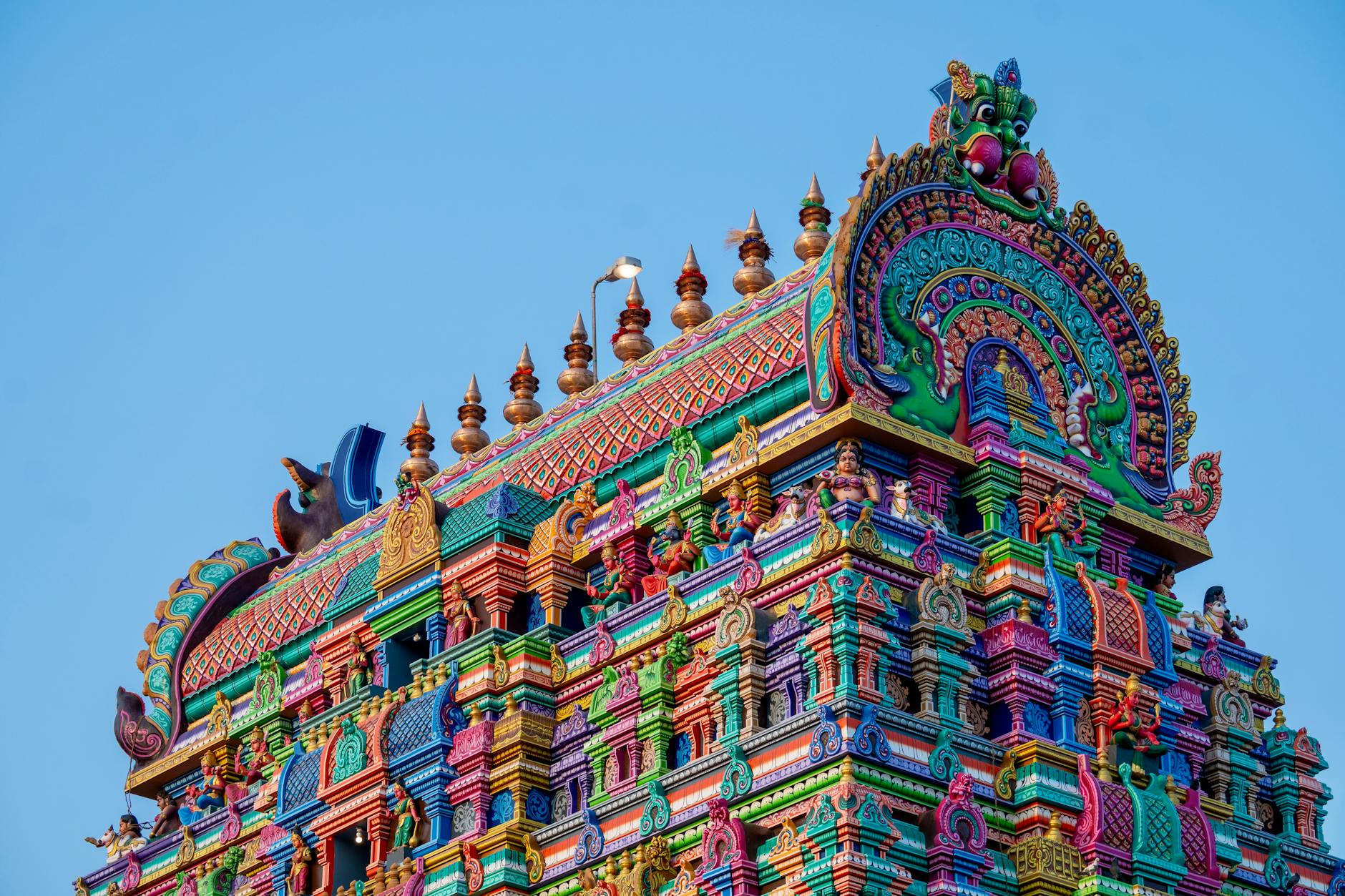
- Dharma refers to moral and cosmic order, ethics, duties, and right living.
- It varies by age, caste (varna), stage of life (ashrama), and context.
- It’s central to how Hindus understand social and spiritual responsibility.
This contains ideas that, by today’s standards, can be considered unjustified, if not abhorrent, particularly the caste system. The duty, moral, ethical, and right living aspects seem to parallel the Buddhist dharma. The idea that stands out to me is cosmic order. Cosmic order stands in direct contravention to concepts like morality, ethics and “right living”. If these dharmic morality, ethics and right living are always in motion and guided by any acclaimed guru as the universe unfolds, then fair enough.
The idea that the cosmos has an order, if cause and effect are true, then it seems dharma is a coherent observation in the sense that it is a cat’s dharma to catch mice. What I don’t understand is that there is a belief in the ethical stories gurus have told us based on a cosmic order. This, of course, brings into question where our concepts and sense of morals and ethics come from. The fact that we have a reasonable explanation in evolution that gives us a sense of morality, and this sense is filled by societal mores, seems to escape this belief system.
I can’t imagine the cognitive dissonance I would feel if I believed in cosmic order, ethics and varna.
6. Moksha (Liberation / Enlightenment)
What does resolution look like?
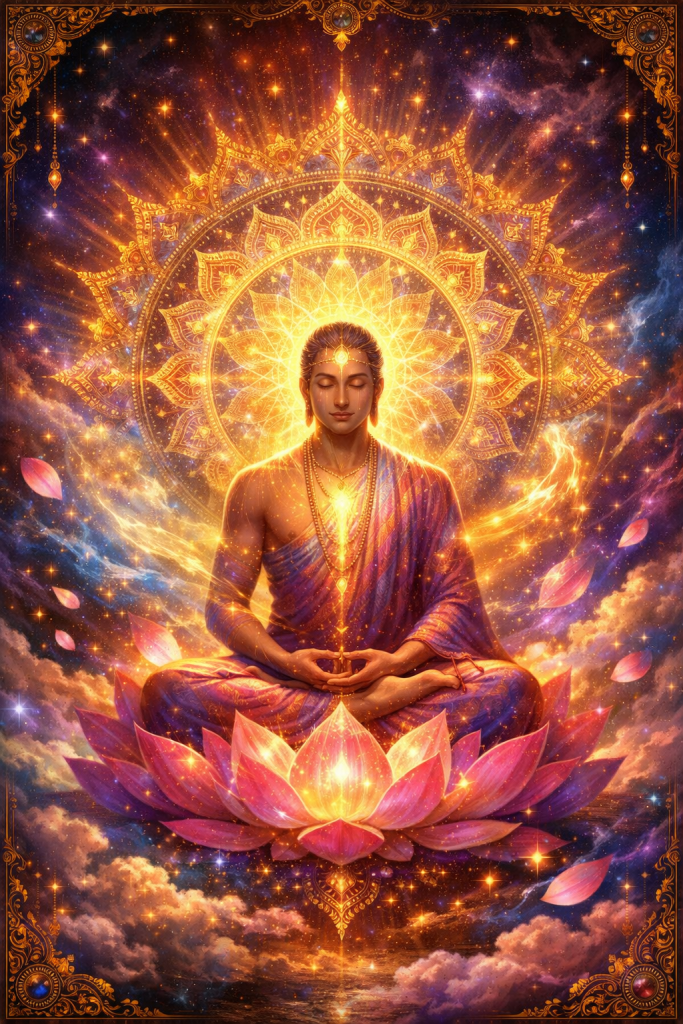
- The ultimate goal of life is to achieve moksha, or liberation from the cycle of samsara.
- Moksha is attained by realizing the true nature of the self (ātman) and its unity with Brahman (the universal spirit).
- Paths to moksha vary: knowledge (jnana), devotion (bhakti), righteous action (karma yoga), or meditation (raja yoga).
Enlightenment: Who would not want some of that? Apparently, once I have a good understanding of reality and the self and their connection with Brahman, I can stop being reborn. Written this way, it feels almost the opposite of the Abrahamic religions. I can live forever with the appropriate enlightenment. Again, I have no problem with ‘unity” or oneness with the universe; it’s the bits and possibly unnecessary pieces that are added on. But there are different methods to obtain this enlightenment.
I wonder if there are other ways? The scientific method? But here we will have agnostic and antirealist philosophers stuck in eternal rebirth. Such is karma.
7. Pluralism and Tolerance
Paths, how might liberation be pursued?
- Hinduism allows for multiple paths to truth (ekam sat vipra bahudha vadanti – “Truth is one, the wise call it by many names”).
- There is room for monotheism, polytheism, pantheism, and even atheism within Hindu thought.
I suppose, like many, if not all, religious traditions, Hindus don’t always practice tolerance or what they preach. My perception is that Hinduism as a whole is a tolerant religion. By and large, Hindus get along with their Islamic and Christian neighbours, and probably better than the other way around. There are religious tensions between Hindus and the other major religions in India. Hindu nationalism has been building over the past few decades, which will likely lead to increased intolerance.
For example, burning of Hindu texts is likely not be seen as one of the multiple paths to the truth. As a counterpoint, burning a copy of my Advanced Inorganic Chemistry (by Cotton and Wilkinson, I know it’s old) would for me be just a pointless symbolic exercise.
8. Scriptures
How is knowledge of all this transmitted and authorized?
- The Vedas are the most authoritative texts, though not always the most followed in practice.
- Other important texts include the Upanishads, Bhagavad Gītā, Ramayana, and Mahabharata.
- Textual authority varies by tradition and practice.
I have only read bits and pieces, so I won’t comment too much here. While I acknowledge that ancient texts have had immense effects on our societies, I do wonder if we still want to hang on to them. Some nineteen years ago, when I started this philosophical journey in earnest, I decided to start with current thought and work backwards in time. The logic being the best and most accurate of past philosophy is more likely to be incorporated into today’s thought. I can pull back some threads in time if necessary. So this draws me more to modern philosophers and science. Science is perhaps the most important product of Western philosophy.
So my question to people who adhere to ancient scripture is, why not do the same? There is a caution, though, knowledge and understanding don’t necessarily advance in a forward direction.
9. Devotion to Deities
A specific (powerful but optional) mode of engagement.
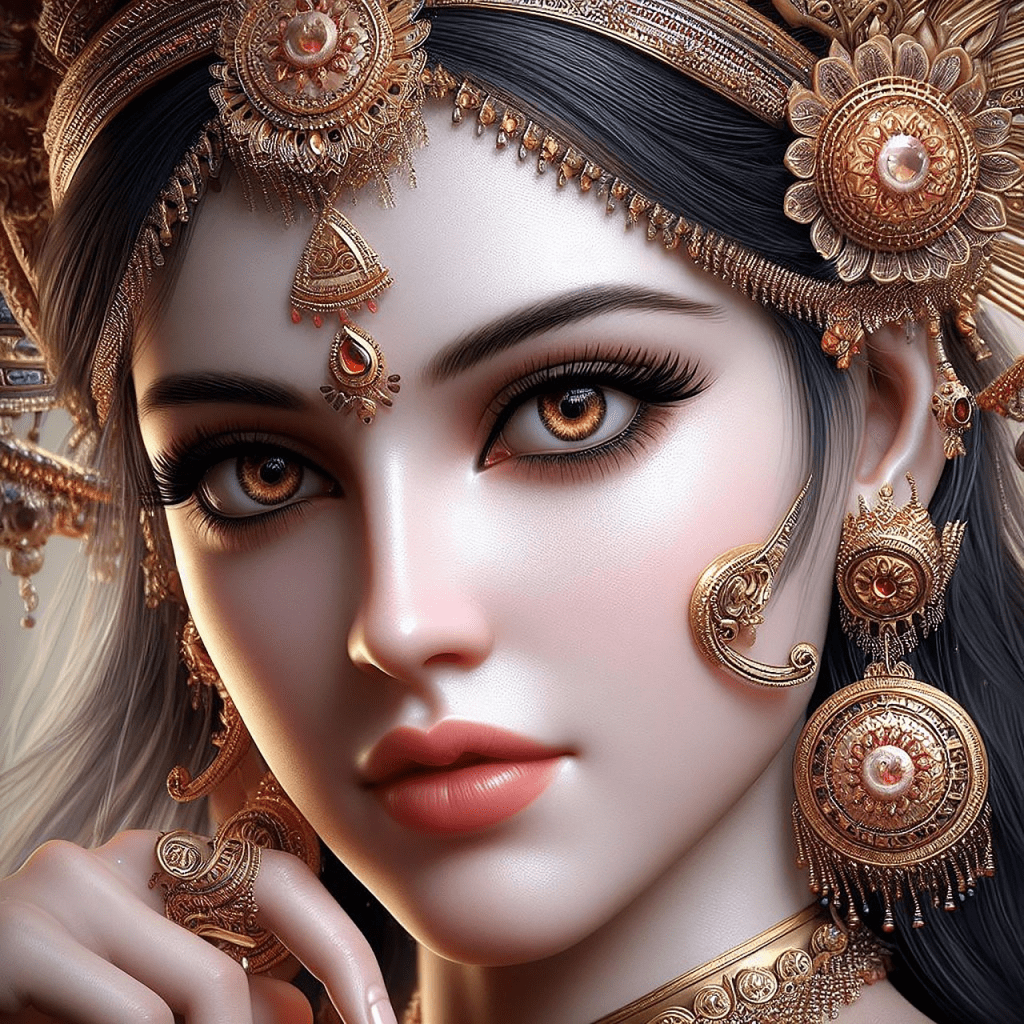
- Most Hindus are bhakti-oriented, meaning they practice devotion to a personal deity.
- Popular gods include Vishnu, Shiva, Devi (the Goddess), Ganesha, Krishna, Rama, and others.
- These are seen either as manifestations of Brahman or as supreme beings in themselves, depending on the tradition.
Here we have the goddy bits. There seems to be a literal belief in some sense, though it appears a Hindu can pick and choose the deity(s) to some extent if they wish. Being a manifestation of Brahman seems interesting. But arguments for these deities boil down to the fact that they’re immaterial, with a few qualifiers. And believe me, the qualifiers are not satisfying. At least not to a rational argument.
Apparently, there can be thousands of deities in the Hindu traditions. Up to 330 million might be considered, but no doubt this number contains many duplicates. There are layers of popularity and ‘seriousness’. Many might be considered demigods, or local/family deities.
10. Varna and Ashrama (Social and Life Stages)
Implementation has been historically ethically fraught.
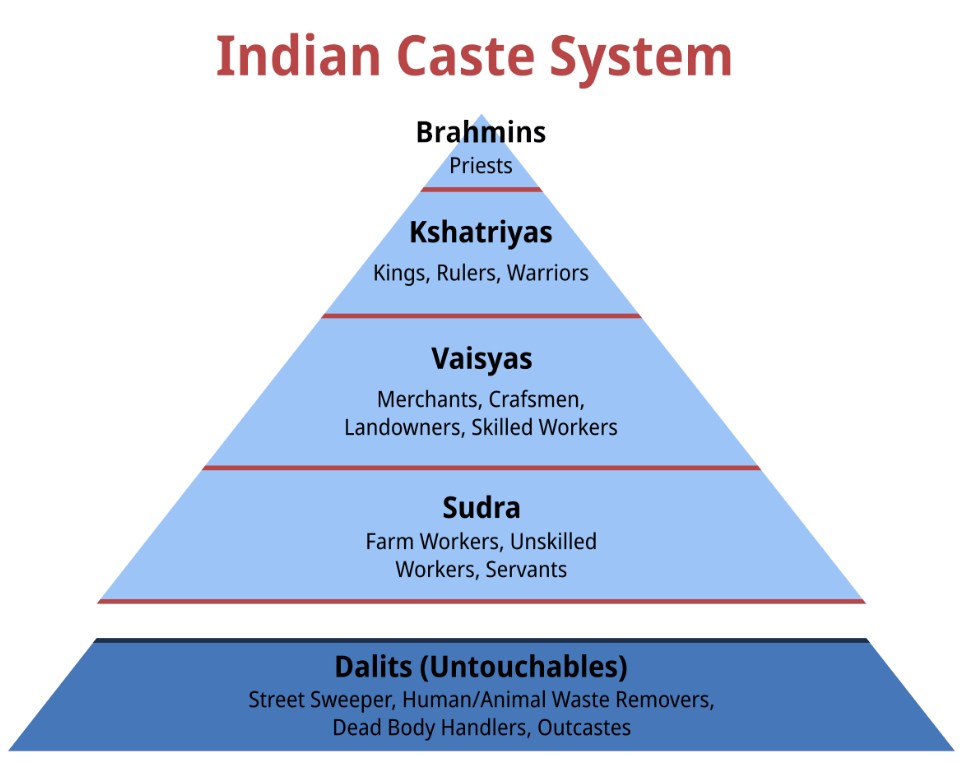
- Traditional Hindu life is structured around four varnas (often translated as castes) and four ashramas (life stages: student, householder, hermit, renunciate).
- While the varna system is often critiqued (especially the caste system), it is deeply woven into many Hindu texts.
And now varna again. The cynic in me might notice who is at the top of the caste system. The very people who are interpreting the scriptures on our behalf. This is a bit like the Tabula Rasa debate gone mad, where the pendulum has swung too far in favour of nature and has not been balanced with nurture. Hindus who accept the caste system and dalits (untouchables) cannot have reconciled Brahman with their other beliefs like karma and dharma. Here, I am not claiming that varna in some ways falsifies Brahman, but that Brahman thought has been overall ineffective in countering this aberration of thought in some Hindu traditions. Some might argue this is similar to Western enlightenment, reversing some of the less desirable aspects of Christian thought. I do wonder if it is Western enlightenment that is promoting the slow move away from the caste system. To be fair, there was very early pushback, perhaps with the Buddhist and Jain traditions. But, change accelerated in the 19th and 20th centuries. This may be worth further study of Western influences.
Ashramas: Here I am reminded of Joseph Campbell and his Power of Myth. He said that one of the purposes of myth (religion) was to guide us through the various stages of life. And Campbell was attracted to the Eastern traditions. He seemed more interested in the cat’s dharma to catch mice rather than a set of rules or guidelines to channel our behaviours. So, in this sense, I have no problem with ashramas as suggestions of how to live life. Having said that, no set of guidelines or rules will work in all situations and will always be open to interpretation.
A Brief Conclusion
The thoughts and opinions are mine (sort of); occasionally, I might express an opinion as a fact, but Brahman may or may not have made me do it.
- The concept of Brahman is intriguing; it parallels many of my thoughts and inclinations. It has a monist framework, but for me, it puts too many bells and whistles into the belief, and ultimately, it cannot be substantiated. The idea that the ultimate reality has to be unchanging is worth further thought.
- Arguments for an unchanging reality do not uniquely support Brahman; the arguments could work for idealist and physicalist interpretations.
- Hinduism has aspects like varna, which, to me, are not reconcilable with Brahman. I am unconvinced that cosmic order or causal determinism can ground our morality.
- That captures one of your strongest analytical critiques.
- Reincarnation and eternal souls only make sense in the vaguest or widest of interpretations.
- Hinduism is not quite agnostic enough for my taste. In the Buddhist tradition, if you see Buddha walking down the road towards you, kill him. You have not found Buddha. Whereas, in some Hindu traditions, you can find enlightenment and, to some extent, know ātman.
- The various schools of thought within Hinduism are not necessarily compatible with one another. For example, they range from compatibilism to no free will.
I think where the philosophical aspects of Hinduism and I seriously part ways is that Hindu philosophy seems prominently to deify consciousness, while I am not sure it is not an epiphenomenon, never mind an ’emergent’ property of matter.
1) Most of the images are AI-generated, Dalle-E and WordPress’s own AI. Otherwise, they are attributed.
2) I worked closely with AI’s MS Copilot, ChatGPT, and Google AI Overview as a foil to check facts and smarten up my writing. There is a possibility that I am railing against a falsehood.

 rom's corner