My overall take on the concept of natural is:
Natural is a null concept
I have been mulling over a post about nature versus nurture for a while now, and, having just read Alan Levinovitz’s book, Natural: The Seductive Myth of Nature’s Goodness, I have been led to put fingers to keyboard. Now, of course, nature and natural have related but occasionally subtle, different meanings depending on the context. Overall, I thought the book is a good read and handles the subject well. Alan is a professor of religious studies, in perhaps a broad sense of religion. To me, that showed through in his writing style, but that was OK … sort of.
Natural Advertising
Okay, this next little bit is a small rant. In the bathroom, I am confronted with my wife’s two live clean bottles: shampoo and conditioner. Living clean? Reasonable to a point. Fresh water? Freshly made from hydrogen and oxygen, I don’t think so? Was it made in the last billion years? Possibly. Has it been deionized or distilled recently? Almost certainly. And the ingredients?
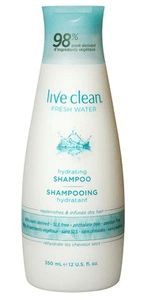
Aqua (Water/Eau), Sodium Lauryl Sulfoacetate, Cocamidopropyl Betaine, Sodium Methyl 2-Sulfolaurate, Sodium Chloride, Lavandula Angustifolia (Lavender) Extract, Chamomilla Recutita (Matricaria) Flower Extract, Rosmarinus Officinalis (Rosemary) Leaf Extract, Camellia Sinensis Leaf Extract, Hydrolyzed Oat Protein, Panthenol, Sodium Hyaluronate, Tocopheryl Acetate, Disodium 2-Sulfolaurate, Hydroxypropyl Methylcellulose, Glycol Distearate, Glycerin, Glyceryl Oleate, Coco-Glucoside, Glyceryl Stearate, Potassium Sorbate, Sodium Benzoate, Benzoic Acid, Butylphenyl Methylpropional, Hexyl Cinnamal, Limonene, Linalool, Parfum (Fragrance), Citric Acid, Sodium Hydroxide
Does it sound like I want to put this on my scalp? I looked at a few of the ingredients. Take limonene, seems harmless enough, the essence of citrus fruits. Well, it degrades quickly in air, and the by-products are skin sensitizers and can cause respiratory irritation. Butylphenyl methylpropional sounds delicious, and I had not come across it. Common name lilial: sounds nice. Banned in the EU and apparently restricted in Canada. Interesting. And now my favourite, sodium hyaluronate. This is the salt of hyaluronic acid, which has been frequently advertised on TV in a high-end facial cream. So where does this acid come from? Well, according to Wikipedia, it is a naturally occurring polymer of an amide-substituted disaccharide. It can be found everywhere in our bodies and those of other animals. Also, according to Wikipedia, it is commercially obtained from rooster combs, other animal parts (such as eyes), and by bacterial fermentation, particularly streptococci. I kid you not.
Now I chose three ingredients chaotically. The bottle claims plant & naturally derived ingredients. Do you buy it? So, how is “naturally” being used here? I suppose, as advertising, it must work. Having said all this, I am sure the shampoo is safe as houses, even if no cruelty to animals or bacteria was involved. There is a paradox here; to obtain things that are healthy and safe, we need some degree of processing, even if it is just cooking.
The Other Naturals
The other naturals from a semantic point of view. The prefixes are un-, super-, non- and preter-. I will ignore concepts that define prefixed-nature in terms of nature for the moment.
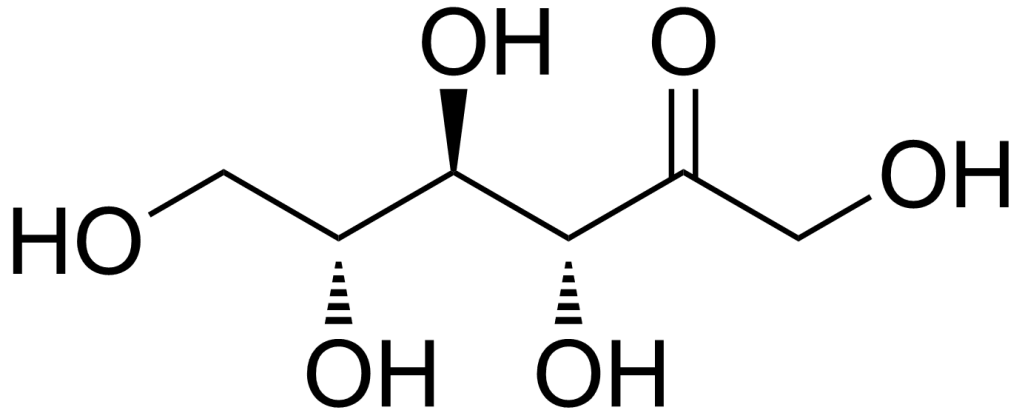
Unnatural Events or behaviours that are artificial or strange. Apparently, unnatural can be ‘value-laden’. We can’t have that, can we? So what examples of artificial might we have? On everyone’s mind today might be intelligence. More mundane stuff: plastic imitations of wood, flowers, fabrics; we have things like sweeteners. Are hybrid fruits like plumcots (plum and apricots) and jostaberry (blackcurrant and gooseberry) artificial? Plums and apricots can hybridize, but in the late 1800s, Floyd Zaiger helped this so-called nature along. Jostaberries required a little bit of human biochemical intervention. I have a hard time thinking of hybrids as unnatural. Plastics and artificial sweeteners are generally not found in prehuman environments, but plastic-like materials and low-calorie sugars like allulose occur in plants. Then there are the ‘natural’ plastics of our early ancestors: amber, rubber, shellac, horn, and of course, tortoise shell.
And as to strange. Strange might derive from a lack of understanding of the antecedent events of the causal web. We might argue that quantum phenomena are strange in the sense that they don’t comport with our Newtonian instincts. But I would not call them unnatural, nor would I call them supernatural: speaking of which:
Supernatural This is probably the easiest one to deal with. Supernatural might refer to forces beyond scientific understanding or perhaps nature. Beyond scientific understanding might include things like paranormal, eg, ghosts, clairvoyance, or telekinesis. Or perhaps even God. Paranormal events don’t occur frequently or regularly, and should they exist, they are difficult to study. Under laboratory-type conditions, they don’t tend to exhibit themselves. So if an event is difficult to explain, then that is exactly what it is: an event that is difficult to explain. Should gods exist, then, they too are part of reality and, in effect, part of our environment. We might not be able to explain them, but then that is OK. We might not have perfect/complete explanations of magnetism and gravity, but that is fine. No need to invoke the supernatural or God.
Naturalism I suppose I should add this in opposition to supernaturalism. Naturalism is a denial that phenomena occur that are apart from a causal chain and that cannot be described by physics, or at least approximated sufficiently to describe that phenomenon. Naturalism, by definition, would argue that if something exists, then it can be subject to scientific examination.
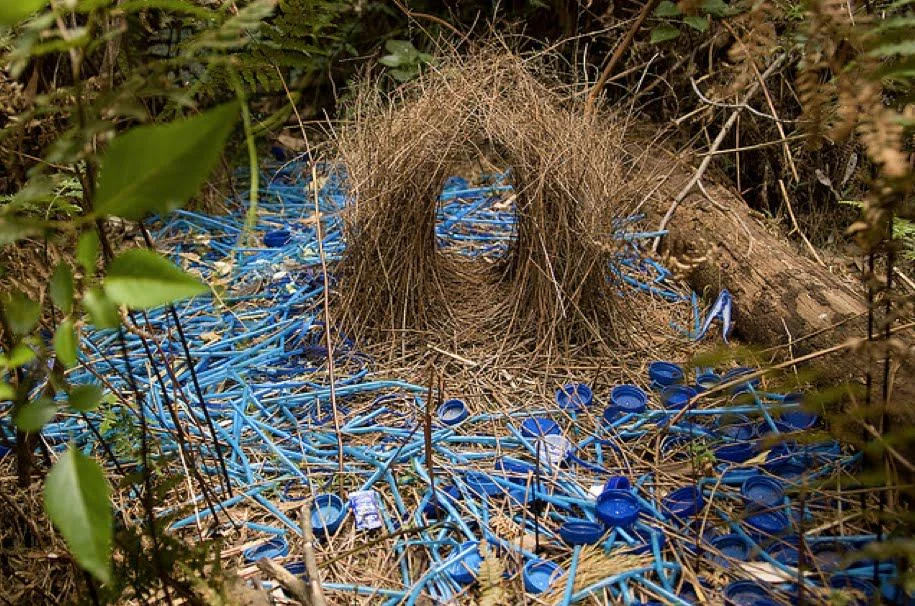
Nonnatural This word rarely enters into my active vocabulary, but it is often used for synthetic materials or artificial lighting and landscaping. In science, we distinguish natural and synthetic (nonnatural) amino acids. In my youth, biology classes taught me that there were twenty natural amino acids. Today, we have twenty-two. ie Two more have been discovered. When did selenocysteine become natural, before or after its addition to the amino acid pantheon? In law, some might suggest that corporations, institutions, and trusts are nonnatural persons. These, of course, are social constructions, coordination devices [Pinker], or fictions [Harari], that have been given rights. I can’t help wondering if that makes people deemed illegal immigrants or criminals deminatural.
Preternatural Experiences that seem outside the normal course of nature or at least [extraordinarily] rare. Maybe ordinary events that cannot be explained by our current understanding. While I may have conceived of this type of concept [however erroneously], I can safely say it has not entered into my active vocabulary. I can’t help thinking we are dancing around the same issue of what is natural beyond an abstract definition.
The more I think about language, the more it amazes me that people ever understand each other.
Kurt Gödel
Don’t get me wrong here. I think I understand what nature, natural, and their antonyms might be to other people. I just think the concepts of natural and nature might be a form of naïve realism.
Natural Selection
For evolution, we need three processes:
1) A system that replicates
2) That the replication is near perfect, but not perfect
3) An environment that selects for particular replicates
In biology, we think of number three as the natural selection bit. When pigeon fanciers breed for colour, speed, and homing abilities, then that somehow is not natural. Leafcutter ants, termites and ambrosia beetles farm fungi. Providing food, conditions, and protection for the fungi and almost certainly shaping the evolution of the fungi is natural. Definitely not as intentional as a pigeon fancier’s breeding program, but it has been going on a lot longer, though.
Is it simply that if the ‘selection’ has been touched by human hand, the selection is no longer natural? If so, what about the increase in atmospheric carbon dioxide that is affecting climates and landscapes all over our Earth? Does that make the resultant selection in evolution no longer natural? Ants that ‘farm’ aphids have almost certainly inadvertently selected for aphids for domestication. There would have been no intent for this selection. Is there a latent lack of intent hidden in the concept of natural?
Nature versus Nurture
Steven Pinker’s The Blank Slate is an excellent summary of the topic, whether it is society at large or genetic determinism that shapes our behaviour. There seems to be a public denial that the genetic component plays a significant role. Putting that aside for the moment, Pinker’s conclusion is that collectively, it is roughly a fifty-fifty mix. Surprisingly, parents only contribute about ten percent to the societal aspect. Having said that, Pinker’s wording was really careful; it went along the lines:
For many psychological traits, about half of the variation among people can be attributed to genetic differences.
This is about the statistical variance across the population, not about my genes accounting for particular aspects of my personality. Or that society accounts for the other 50 %. It is more about us. Or, heritability is a statement about differences among people, not about the origins of a trait in an individual.
Either way, nurture is a proxy for our immediate environment, initially our families, and as we transition into adulthood, it is society at large. But here I would like to stress it is our environment, very local at first and then we are increasingly let loose on the rest of the world. Whereas our genetics, as alluded to above, are also shaped by environment. But the environment is displaced in time, be it decades or even millennia. Here we have the past environment shaping us with the lever of time.
Whether it is nature or nurture shaping us, ultimately, it is always our environment in the present or in our deep, inherited past.
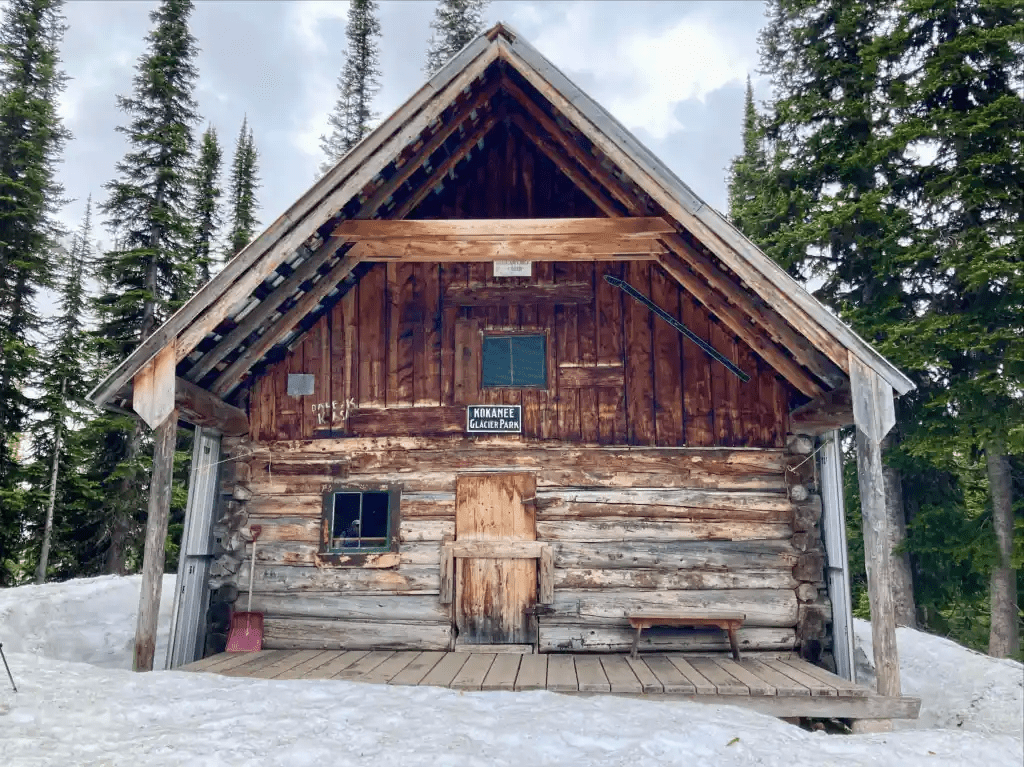
Slocan Chief Cabin
Nature as Religion
Almost forty years ago, I hiked up to Slocan Chief Cabin in the Kokanee Glacier Provincial Park with Madeleine and some friends. I am not an outdoorsman, and Madeleine is less so. You could overnight in the cabin back then, but it was first-come, first-served, so we had to bring up some tents just in case. Our tents were not lightweight, so it was a bit of a slog. It certainly was beautiful, and a certain “at oneness” was achieved. It was just a four-hour hike up to the cabin. I thought it would be really nice if we could keep this bit of the environment pristine. It then crossed my mind that I was part of the problem here. This is where I started to avoid natural nature. Not that I revered it or disliked it, but if I want that part of the environment to stay pristine, I can stay the hell away. Having said that, if I stand on my roof and look around, I probably can see a couple of million trees.
We are back to Levinovitz’s thesis here.
The phenomenon of nuclear fission reactors might be considered archetypal, not natural events. Yet about 1.7 Ga ago, a small fission reactor popped into existence and chugged away, on and off, for a hundred thousand years or two, releasing uncontained fission products into the environment. Since our realization in the 1970s of what happened in Oklo back then, it has been an opportunity for scientists to study how long-lived fission products migrate and disperse, and how they affect the environment.
Natural Sex
Well, this one is interesting. Is intercourse between homosexuals “natural”? Historically, it was pointed out that this sort of thing did not happen between animals in their natural environments. It was pointed out that it occurred in zoos. Of course, this was not in the wild and therefore not in nature. But then on closer inspection, it happens in the wild too, to varying degrees, for example, The evolution of same-sex sexual behaviour in mammals, Nature Communications volume 14, Article number: 5719 (2023). Either way, this misses the point; whether something happens in nature is irrelevant to it being right or wrong in a human context.
Then there is the gender/sex debate. There is a valid argument that the societal roles people play have a continuum. Similarly, people display variations in body chemistry, neural structures and feelings regarding their gender. People on both sides of the fence point to nature to support their argument. I don’t want to spend too much time here, but I am not convinced to appeals to nature as to what is natural or not.
Naturism
There is a time and place for this activity. The middle of the night in Canada’s winter is not it. I think I understand and definitely feel some sympathy for being naked. A bit of vitamin D and infrared for the nether regions. Not too much, of course. Is being clothed natural? If not, when did it stop being so, or when did it start being natural? All this is mired in social and legal customs. I currently have a post on this subject in the works.
Naturalization
I include this one for fun. I am Canadian; I have pieces of paper, bits of plastic, and, no doubt, a wealth of digital data confirming my status. I was born in Canada but brought up in the UK. The ever-suffering British taxpayer paid for my education. My wife, on the other hand, has dual citizenship. And that is another story there. She had to study and pass a test on Canadian history and culture to become a naturalized citizen, though, to be fair, she did not have to swear allegiance to one of the local hockey teams. Whereas I can waltz into Canada, metaphorically waving my Canuck passport (not so simply) because of my location of birth. I am a ‘natural’ Canadian. My wife had to be ‘naturalized’.
In Summary
This is not a review of Levinovitz’s Natural, but a discussion of where I found it food for thought. Overall, I found Alan Levinovitz had an interesting take on the subject, and I largely agreed with where he was going, ie, not deifying nature.
I would go a little further. I would avoid the shifty split into natural and all the others that are not. Just because something is touched, even heavily, by human hand does not make that something somehow less ‘holy’.
If everything is natural, then there is no divide and natural and its alternatives are null concepts.